



Frameless vs Semi-Frameless Pool Fencing: Cost, Installation & What Most People Get Wrong

When you're planning your pool fencing project, you've probably heard conflicting advice about frameless versus semi-frameless options. The truth is, most people get the basics completely wrong – especially when it comes to installation complexity and long-term costs. Let's clear up the confusion and help you make the right choice for your backyard oasis.
The Real Cost Story: It's Not What You Think
Semi-frameless fencing typically costs more upfront than you'd expect. While the glass panels themselves aren't necessarily thinner—most modern semi-frameless panels are now typically 12mm toughened glass—the total project cost often catches homeowners off guard. Here's why:
Semi-frameless requires more individual components – vertical posts, specialized brackets, additional hardware, and more complex structural elements. Each post needs its own foundation work, and you're essentially buying a mini structural system for every panel junction.
Frameless fencing has a higher material cost per square metre, but the total project cost is often surprisingly competitive. You're buying fewer overall components – essentially just the glass panels and spigots (the ground-mounted fixing points).
The sweet spot? Frameless often delivers better long-term value when you factor in maintenance, replacement parts, and the visual impact on your property value.
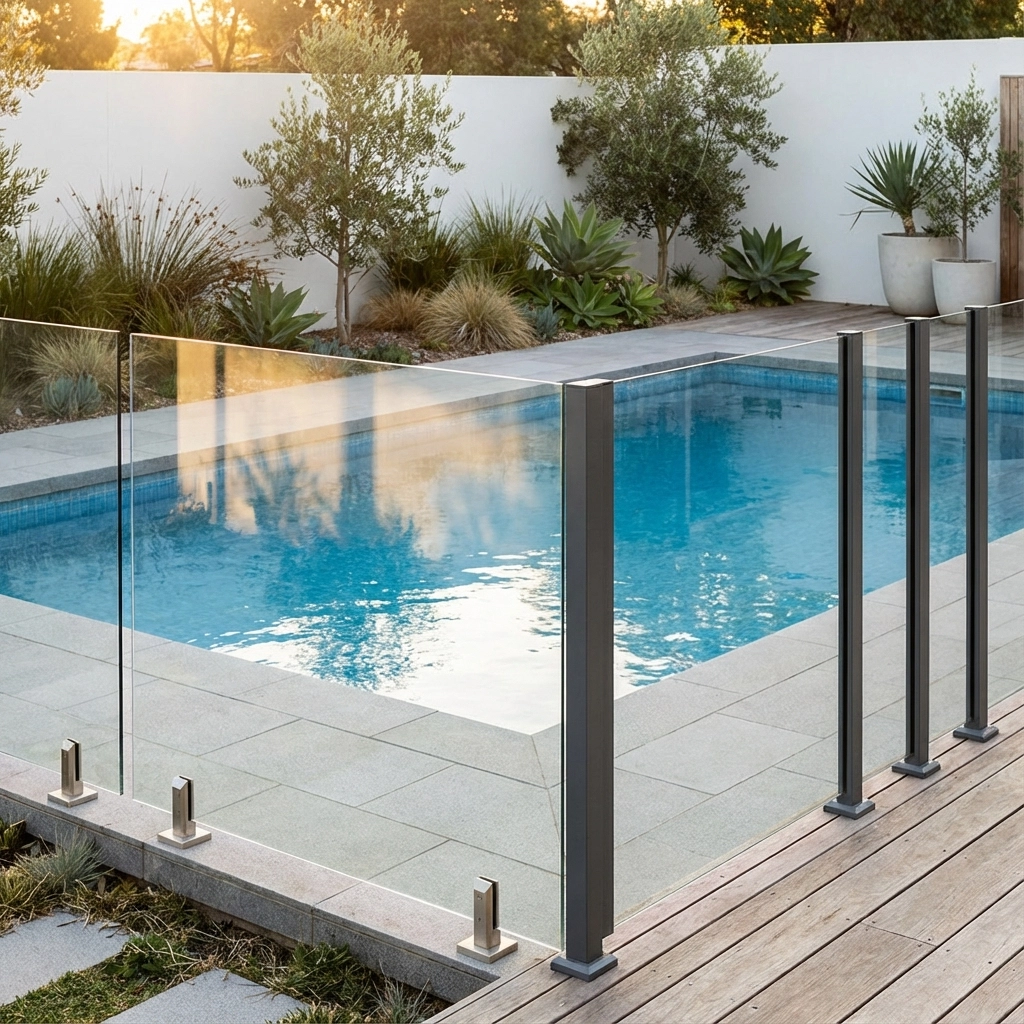
Installation Reality Check: Frameless Wins on Simplicity
This is where most people get it completely wrong. The common belief is that frameless is more complex to install – but that's outdated thinking based on old installation methods.
Why Frameless Installation is Actually Easier
Fewer decision points during installation: With frameless, you're working with clean lines and simple spigot placements. There's no need to align multiple posts, check frame levels, or coordinate complex bracket systems.
More forgiving measurements: Semi-frameless requires precise post spacing, perfectly aligned vertical elements, and exact frame measurements. If one post is slightly off, it affects the entire run. Frameless uses continuous glass panels with spigots that can accommodate minor measurement variations more easily.
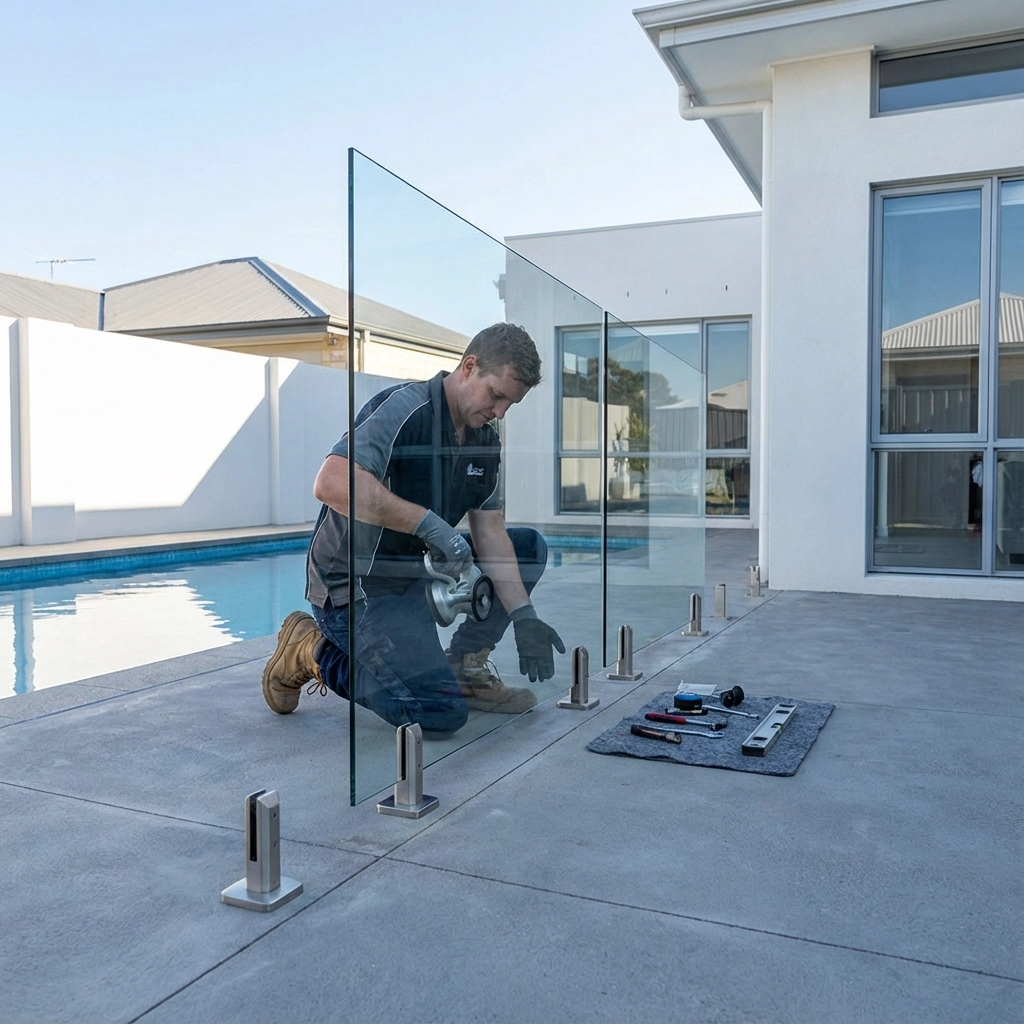
Streamlined process: A typical frameless installation involves:
- Mark spigot positions
- Drill anchor points
- Install spigots
- Mount glass panels
Compare that to semi-frameless:
- Mark all post positions
- Install foundations for each post
- Set and align vertical posts
- Check post spacing and alignment
- Install glass panels between posts
- Adjust and fine-tune multiple connection points
Less weather-dependent timing: Since frameless has fewer components and connection points, installation can often be completed more quickly, reducing weather delays.
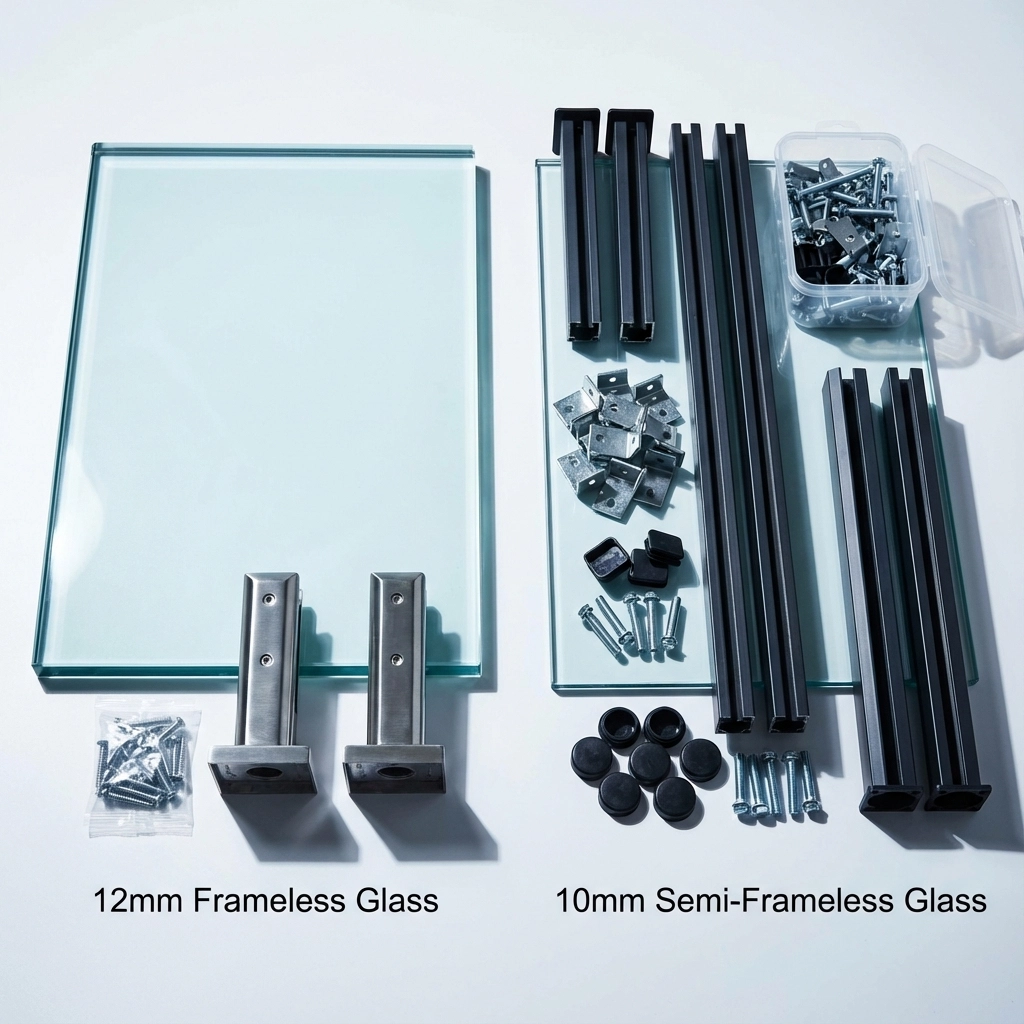
Component Breakdown: Less Really is More
Frameless components per 10-metre run:
- Spigots (6-8 pieces)
- Basic hardware kit
- Gate mechanism (if required)
Semi-frameless components per 10-metre run:
- Vertical posts (3-4 pieces)
- Post caps
- Base covers
- Panel brackets
- Extensive hardware kit
- Additional structural elements
- Gate mechanism (if required)
The component count difference is significant – and each additional piece represents potential maintenance, replacement costs, and installation complexity.
What Most People Get Wrong About Pool Fencing
Misconception 1: "Semi-frameless is the budget option"
While the glass panels cost less individually, the total project often reaches similar pricing once you factor in all the additional components and installation time. Many homeowners are surprised when their "budget" semi-frameless quote comes in higher than expected.
Misconception 2: "Frameless requires specialist installers"
Modern frameless systems are designed for straightforward installation. The perceived complexity often comes from older installation methods that are no longer standard practice.
Misconception 3: "You need perfect measurements for frameless"
Actually, it's semi-frameless that requires precise post spacing and alignment. Frameless systems with continuous glass panels are more accommodating of minor measurement variations.
Misconception 4: "Semi-frameless is more durable"
Both systems meet Australian safety standards, but frameless has fewer connection points and components that can loosen, corrode, or require maintenance over time.
Practical Considerations for Your Project
Site Conditions That Favour Frameless
- Sloping ground (easier to accommodate with spigots than multiple posts)
- Limited access areas (fewer components to transport and manoeuvre)
- Properties where visual impact is priority
- Areas with high salt exposure (fewer metal components)
Site Conditions That Favour Semi-frameless
- Very tight budgets where initial cost matters most
- Properties where some visual structure is preferred
- Installations where the fence line needs frequent gates or openings
Maintenance Realities
Frameless maintenance: Focus on glass cleaning and occasional spigot inspection. Fewer components mean fewer things that can go wrong.
Semi-frameless maintenance: Regular inspection of post connections, bracket tightness, and more surface area that accumulates dirt and debris.
Making Your Decision: A Practical Framework
Choose frameless when:
- You want the simplest installation process
- Long-term value matters more than initial savings
- Visual impact is important for your property
- You prefer minimal ongoing maintenance
- Your site has challenging access or slopes
Choose semi-frameless when:
- Upfront budget is the primary concern
- You prefer some structural visual elements
- Your installation timeline is very flexible
- You're comfortable with more complex maintenance
Professional Installation Tips
Regardless of which system you choose, proper installation is crucial. Both frameless and semi-frameless fencing must comply with Australian Standard AS 1926.1 for swimming pool barriers.
For professional guidance on your specific project, Glass House AU offers custom glass solutions and detailed installation guides to ensure your pool fencing project delivers the safety, aesthetics, and value you're looking for.
The bottom line? Don't let outdated assumptions about installation complexity or cost drive your decision. Frameless systems have evolved to offer genuine advantages in both installation simplicity and long-term value – making them an increasingly smart choice for modern Australian homes.
Your pool area deserves fencing that delivers on safety without compromising on style or breaking the budget. Whether you choose frameless or semi-frameless, understanding the real differences helps you make the right call for your specific situation and priorities.